
Precision Diagnostics
Diagnostics & Technology
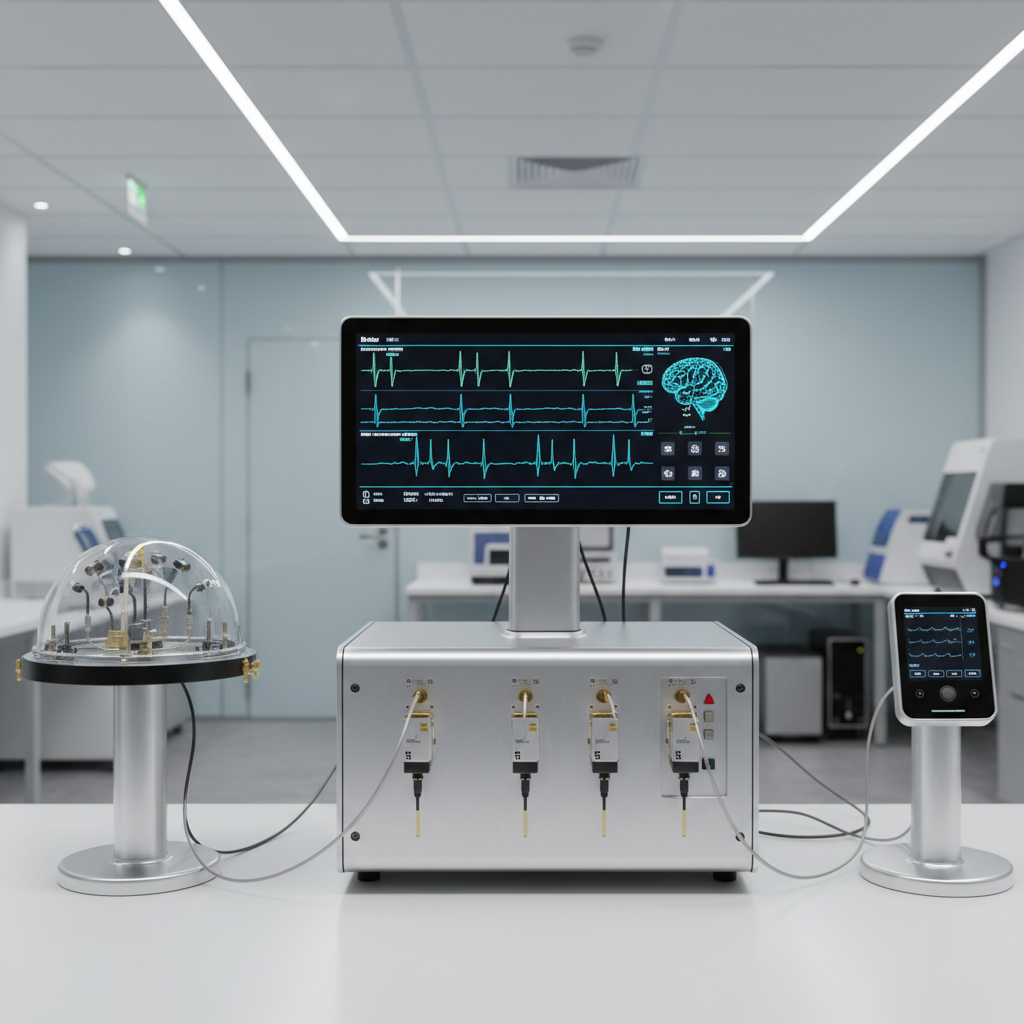
Accurate diagnosis is the foundation of effective neurological treatment. At Blacksburg Neurology, P.C., we offer on-site electrodiagnostic testing — eliminating the need for referrals to outside facilities and ensuring that your diagnostic results are interpreted by the physician who knows you best.
On-Site Capabilities
Advanced Diagnostics, Right Here.
Having on-site diagnostic capabilities means faster answers, a more integrated care experience, and the assurance that your results are interpreted by the physician who knows your complete clinical history. No referrals to outside facilities. No waiting weeks for results from a stranger.
EEG — Electroencephalogram
How It Works
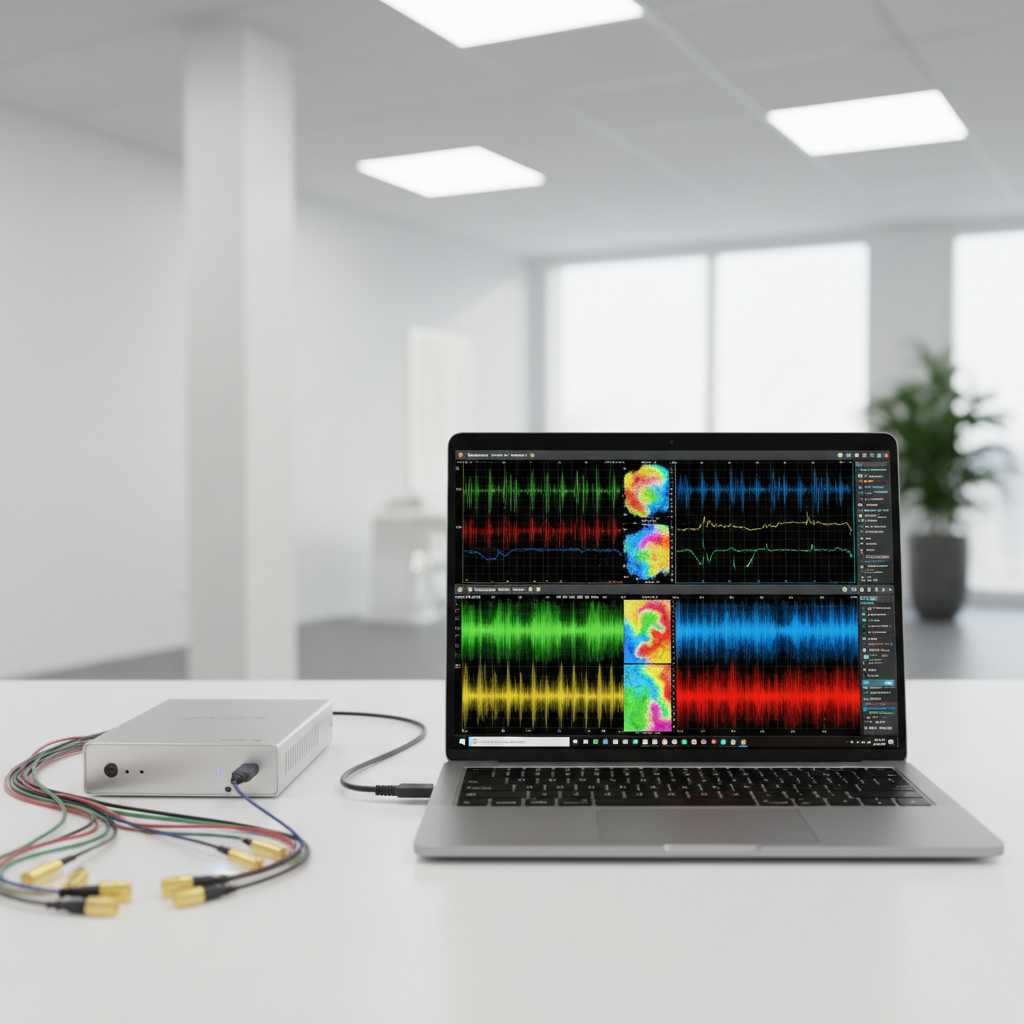
An electroencephalogram (EEG) records the electrical activity of the brain through small, flat metal discs (electrodes) attached to the scalp with a conductive gel. The electrodes detect tiny electrical charges that result from the activity of brain cells. These signals are amplified and recorded as wave patterns. The entire procedure is painless, non-invasive, and typically takes 45–90 minutes.
Why It Matters
EEG is the gold standard diagnostic tool for evaluating seizure disorders and epilepsy. It can detect abnormal electrical patterns in the brain that indicate seizure activity, even between actual seizure events. EEG is also valuable in evaluating encephalopathy (altered brain function), sleep disorders with neurological components, and other conditions affecting brain electrical activity. At Blacksburg Neurology, all EEG studies are performed and personally interpreted by Dr. Huntsman — ensuring that results are integrated with your complete clinical picture.
What to Expect
- Arrive with clean, dry hair — no oils, sprays, or conditioners
- A technician will measure your head and apply electrodes using a conductive gel
- You will be asked to lie still, relax, and breathe normally
- You may be asked to breathe deeply (hyperventilation) or look at a flashing light — these are standard activation procedures
- The recording typically takes 20–40 minutes; the full appointment is 45–90 minutes
- Results are reviewed by Dr. Huntsman and discussed with you directly
EMG & Nerve Conduction Studies
How It Works
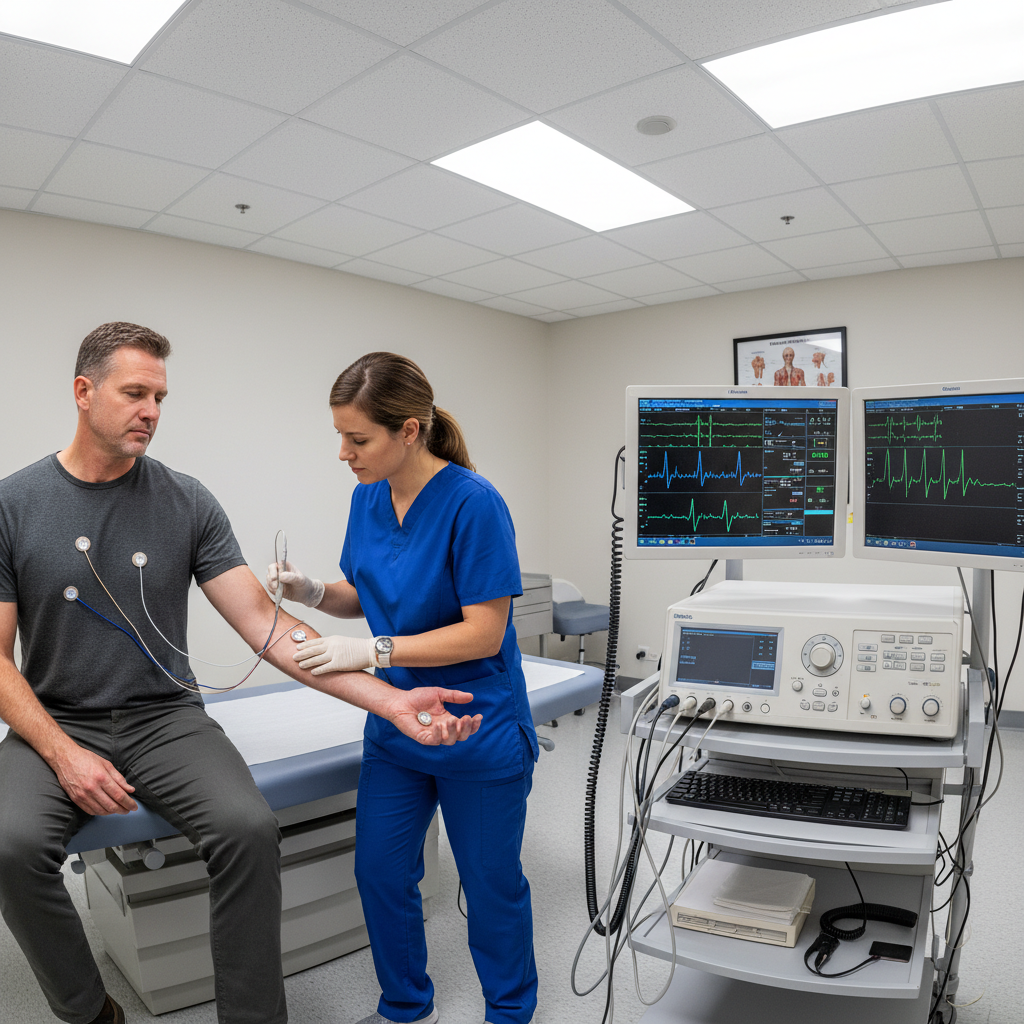
Electromyography (EMG) and nerve conduction studies (NCS) are two complementary tests that evaluate the health of muscles and the nerves that control them. Nerve conduction studies measure how fast and how well electrical signals travel along a nerve, using small electrodes placed on the skin. EMG involves inserting a very thin needle electrode into specific muscles to record their electrical activity at rest and during contraction.
Why It Matters
EMG/NCS are the gold standard for diagnosing disorders of the peripheral nervous system. They can precisely identify the location, severity, and type of nerve or muscle damage — information that is essential for accurate diagnosis and treatment planning. These studies are critical for evaluating peripheral neuropathy, radiculopathy (pinched nerves in the spine), carpal tunnel syndrome, ulnar neuropathy, myopathy (muscle disease), and motor neuron disease. At Blacksburg Neurology, Dr. Huntsman personally performs and interprets every EMG/NCS study.
What to Expect
- Wear comfortable, loose-fitting clothing that allows access to arms and legs
- Avoid applying lotions or oils to the skin on the day of the test
- The NCS portion uses small electrical pulses — you will feel a brief tingling or twitching sensation
- The EMG portion involves a thin needle electrode — most patients describe mild discomfort similar to a blood draw
- The full study typically takes 45–90 minutes depending on the areas being evaluated
- Dr. Huntsman will discuss preliminary findings with you before you leave

Comprehensive Neurological Evaluation
How It Works
A comprehensive neurological evaluation is a thorough clinical assessment of the nervous system conducted by Dr. Huntsman. It includes a detailed medical history review, a structured neurological examination assessing mental status, cranial nerves, motor function, sensory function, coordination, reflexes, and gait. The evaluation is integrated with review of prior imaging, laboratory results, and any electrodiagnostic studies performed.
Why It Matters
The neurological examination remains the most powerful diagnostic tool in neurology. It allows Dr. Huntsman to localize the source of neurological symptoms — determining whether a problem originates in the brain, spinal cord, peripheral nerves, or muscles. This localization guides the selection of appropriate diagnostic tests and treatment strategies. At Blacksburg Neurology, every patient receives an unhurried, thorough evaluation — not a rushed 10-minute appointment.
What to Expect
- Bring a complete list of current medications, including supplements
- Bring any prior neurological records, imaging reports, or lab results
- Be prepared to describe your symptoms in detail — when they started, what makes them better or worse
- The examination is non-invasive and involves simple tasks such as walking, following a light, and responding to sensory stimuli
- Initial consultations typically last 45–60 minutes
- Dr. Huntsman will explain his findings and recommendations in plain language before you leave
Schedule Your Evaluation
Answers Start with the Right Test.
If your physician has recommended neurological testing, or if you are experiencing symptoms that warrant evaluation, contact us to schedule your appointment. Our team will guide you through the process from start to finish.